Save the Illinois River Inc. | Environment | March 12, 2026
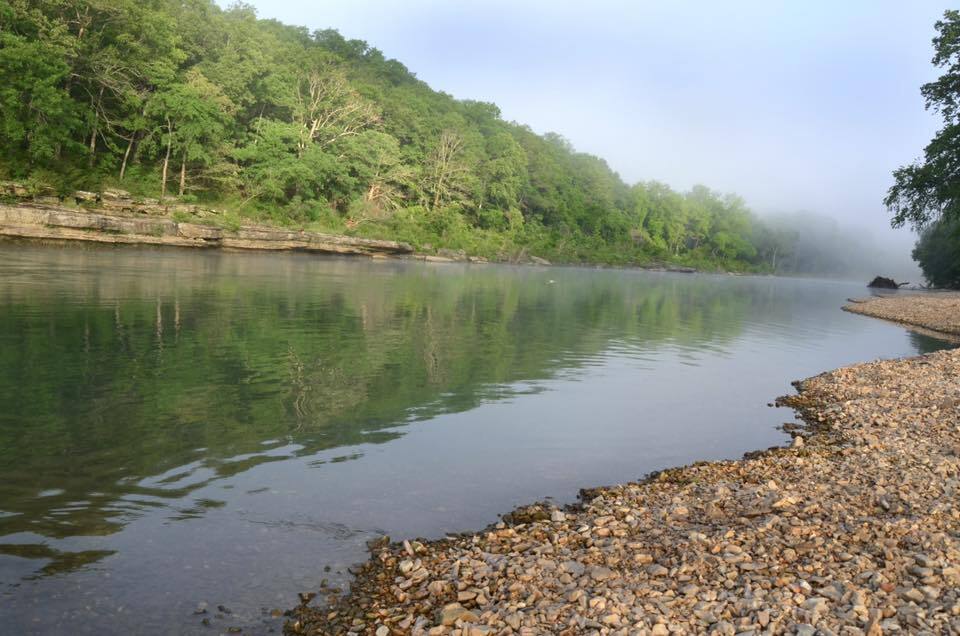
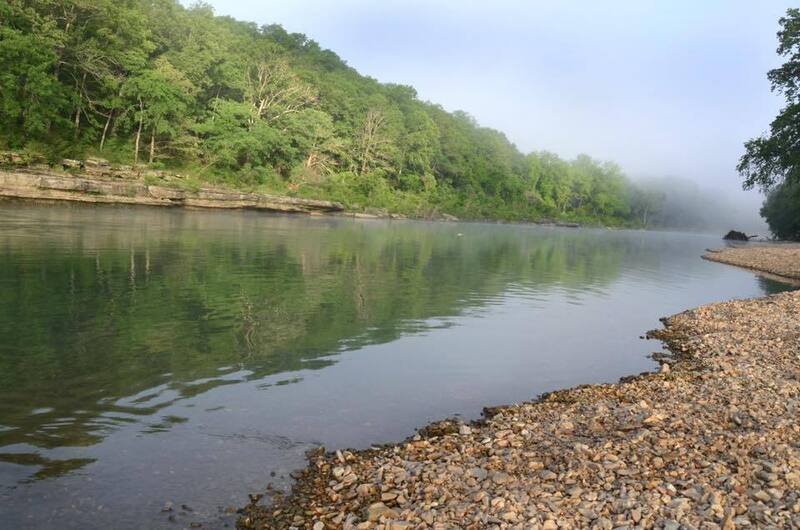
The Illinois River near Chewey Bridge by Nancy Garber
STIR Member Jeri Fleming Leads Illinois River Conservation Grant
From the Tahlequah Daily Press
WATERSHED PROTECTION: Native plantings help save waterways, feed pollinators
By Lee Guthrie | lguthrie@tahlequahdailypress.
Waterways designated as scenic in Oklahoma, like the Illinois River, have special protections, two of them being to preserve water quality and scenic beautyThe care of the Illinois River rests on the backs of Grand River Dam Authority, and one former employee, Jeri Fleming, has switched her focus to help fulfill a grant received by the Cherokee Nation.
An article titled, “Cherokee Nation awarded nearly $773,000 for Illinois River Watershed [Project] conservation planning,” published Jan. 28, in the Cherokee Phoenix, detailed the grant. The purpose of the grant is to develop a comprehensive conservation and restoration plan for the Illinois River. Funding comes from the America’s Ecosystem Restoration Initiative. It is a two-year planning project, and works with partners in both Oklahoma and Arkansas to address critical conservation needs within the watershed, states the article.
Naomi Fuson, County Extension director, Family and Consumer Sciences/4-H educator, introduced Fleming. Fuson is a recent hire to fill the position Heather Winn held until she took another job.
Fleming’s presentation tied into how to develop gardens and lawns that don’t release fertilizers and weed killer into the drains, which enters the creeks, and then the rivers. She closed her talk with a discussion on how this work is manifesting in Mission Park, the newest public space in Tahlequah.
“The Tahlequah Mission Park Project is an ongoing effort to create a natural park
that serves as both a local wildlife reservation and as a communal space for recreational activities, such as biking or walking trails, picnic spaces, and more as we receive continued support,” states the website www.missionpark.org. “This is only the first step in developing a cleaner and more active environment.”
Attendees at the March 10 gathering of the Oklahoma Home and Community Education clubs, listened and asked questions as Fleming talked of how to plant wildflowers, and what to expect in growth. She spoke on low-impact development, which is stormwater runoff.
“The watershed is what we call an inverse watershed; normally in a watershed your development happens further downstream,” Fleming said. “But in the case of the Illinois River Watershed, a large part of the development happens in the headwaters in Northwest Arkansas.”
In order to address runoff that is within the scope of homeowners, a lot of work is done with communities to help slow the flow of water off of impervious surfaces, mimicking natural hydrology – the reason it is called green infrastructure, low-impact development.
“We want to reduce the amount of stormwater runoff we are getting off of those urban areas,” Fleming said.
The only way to protect water quality from stormwater runoff is through best management practices, all voluntary, Fleming said.
“The Clean Water Act was passed in 1972 and was designed to address point sources, like a wastewater plant, into streams that directly discharge, where I can point from the source and saying it is coming from that wastewater plant,” Fleming said.
Nonpoint source refers to all other sources, and is difficult to regulate, and the best way to do so is with these best management practices, Fleming said.
“It can be things like rain gardens, how you mow you lawn,” Fleming said. “If you mow your lawn really short you will have more water run off your lawn because the roots are really short.”
“A short, thick lawn can act almost like concrete, and will get very little infiltration and you will run off a lot more water,” Fleming said. “You can actually reduce erosion with how you manage a lawn, and what you plant can make a difference. Native plants have deeper root systems, and are more adapted to the climate so require less water.”
A book by the Oklahoma Extension Office titled, Oklahoma Proven, has recommended plants adapted to Oklahoma’s climate. More information can be found at extension.okstate.edu/programs/oklahoma-proven.
Fleming spoke of the Callery pear, commonly called the Bradford pear, which is invasive and has become thickly populated in the woods and along highways of Oklahoma.
“They were supposed to be sterile, but when they grafted them to the Callery pear stem, somehow that overrode the sterility and now they have little berries the birds love,” Fleming said. “Now they are everywhere, so the majority of the trees you see in bloom now are Callery pears.”
The problem with this is the native plums get outcompeted, because the Callery pears grow tall and take the nutrients from the native plums.
Get involved
Mission Park is one focus of the work from this grant, and Fleming said native gardens are being planted, and volunteers are working on clearing and planting. She invited anyone interested in helping to contact her at 405-334-6343 or jeri@irwp.org. She is officed in Tahlequah four days a week. If a person lives within 1,020 feet of a stream, lake or river, and has a septic tank, there is some money for replacement of these systems, Fleming said. She said anyone interested in finding out more about this part of the program can contact her.
-----------------------------------------------------
IT'S TIME TO SHOW YOUR SUPPORT FOR OUR ILLINOIS RIVER AND LAKE TENKILLER
2026 dues for STIR membership may be paid online
FREE STIR STICKERS AVAILABLE BY MAIL.
COLOR OR BLACK AND WHITE.


For free STIR stickers, mail to: STIR, 24369 E 757 Rd, Tahlequah, OK 74464